
Notifications
 By Charl Botha
Apr 16
7 minutes, 23 seconds
440 views 0 comments 1 like 0 reviews
Presentation to Parliament – Why It Matters More Than It Looks
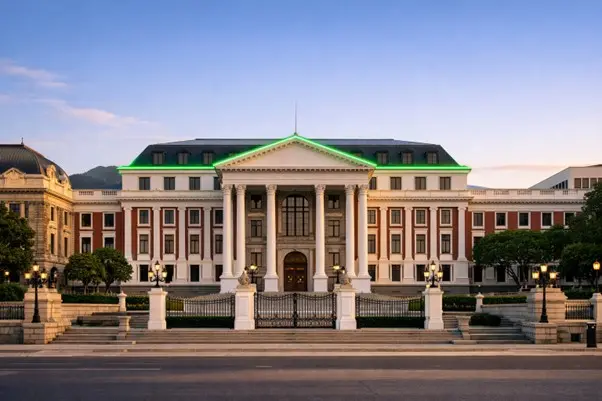
In South Africa’s evolving cannabis policy landscape, a 30-minute briefing to a parliamentary committee can appear routine. Yet on 6 March 2026, when H3 Legal Solutions delivered its formal input to the Portfolio Committee on Trade, Industry and Competition, it represented far more than procedural courtesy. It marked the moment cannabis reform moved from external advocacy into the very machinery where industrial policy, legislation, and economic frameworks are forged.
A parliamentary committee is not a debating society. It is the engine room of accountable governance. Here, departments are held to account, information is tested, gaps are exposed, and the raw material for future legislation is shaped. What is placed on record and how it is framed becomes the version of reality that Members of Parliament carry forward. Incomplete or fragmented input slows progress. Clear, structured, evidence-based contributions accelerate it.
The Function of the Committee in Cannabis Reform
The Portfolio Committee on Trade, Industry and Competition oversees the Department of Trade, Industry and Competition (DTIC) and, by extension, the commercial and industrial dimensions of the National Cannabis Master Plan. Its role is to examine whether policy intentions translate into practical, constitutional, and economically viable outcomes. Presentations from government departments (Trade, Agriculture, Health, and Justice), researchers from the University of Cape Town and the South African Medical Research Council, and private stakeholders like H3 Legal Solutions all feed into this process.
After years of sustained engagement including more than 63 formal letters, policy papers, and submissions, the cannabis conversation has now entered the official parliamentary record. This is significant. Once an issue is properly documented before a committee, it can no longer be treated as peripheral. It becomes part of the system Parliament is constitutionally required to address.
Framing Determines Direction
In a multi-departmental sector like cannabis, framing is everything. Present the issue primarily as a health risk, and regulatory control remains heavily medicalised. Frame it as an agricultural opportunity, and cultivation systems take centre stage. Position it as a trade and industrial policy matter, and the focus shifts toward commercialisation, value-chain development, market access, and economic inclusion.
All these perspectives have merit. But emphasis shapes responsibility. The way challenges are articulated in Parliament influences which department leads, how regulatory authority is allocated in law, and which solutions are prioritised in the forthcoming Cannabis Bill (targeted for introduction by mid-2027).
H3 Legal Solutions brought a practical, ground-level perspective grounded in direct operator and community experience. The briefing highlighted the structural gap that defines South Africa’s current reality: private adult use and cultivation are constitutionally protected and lawful, yet there remains no operational framework for lawful processing, aggregation, distribution, or retail. The result? An illicit market estimated at R36 billion continues to dominate, while licensed facilities sit underutilised, heritage and small-scale growers remain largely excluded, investment stays hesitant, and law enforcement operates with outdated tools in a partially legalised environment.
The core message was clear and measured: “The constitutional debate is settled. The policy framework exists. What remains is execution.”
The Danger of Fragmented Voices
One of the greatest risks at this stage is fragmentation. Health speaks to public safety. Agriculture addresses cultivation. Trade focuses on economic opportunity. Justice deals with legal boundaries. Each department is correct within its mandate, yet when presented in silos, Parliament receives partial pictures rather than a coherent system view.
This creates hesitation. Not because the individual elements are unclear, but because they have not yet been aligned into a single, actionable framework. Without that integration, sequencing stalls, responsibilities blur, and progress slows, even as the sector continues to operate informally on the ground.
What Was Really at Stake on 6 March 2026
A well-structured presentation does not merely inform; it intervenes. It can accelerate regulatory alignment, clarify inter-departmental responsibilities, and highlight workable pathways (as seen in the successful stabilisation of the hemp sector through adjusted THC limits, longer permits, and shifted governance).
Conversely, vague or disconnected input can entrench confusion and delay meaningful reform for years. In a sector where people and communities are already participating daily, such delay carries tangible economic and social costs.
The Real Responsibility of Stakeholders
Presenting before Parliament carries a duty that goes beyond advocacy. It demands clarity, honesty about implementation gaps, recognition of on-the-ground realities, and a constructive articulation of what needs to change. Once placed on the official record, those insights begin shaping how the issue is understood — and how the response is ultimately legislated.
Key Takeaway
A briefing to a parliamentary committee is never just a summary of the system. It is an intervention that helps define how the system will be built. In South Africa’s cannabis space, where the gap between constitutional rights and practical reality remains wide, the quality and coherence of input delivered on 6 March 2026 will influence how quickly and how effectively that gap is closed.
The conversation has left the corridors of advocacy. It is now inside the room where policy becomes law and law becomes implementation. Execution is the next frontier and the parliamentary record is already being written.
Charl Botha is a legal strategist, cannabis policy specialist, and founder of H3 Legal Solutions (Pty) Ltd. He writes and briefs on the intersection of constitutional rights, industrial policy, and responsible cannabis commercialisation in South Africa.




Share this page with your family and friends.