Parliament’s latest hearings on the National Cannabis Master Plan put public health at the centre of the debate. Harm reduction, protecting youth, pregnant women and the elderly, these are now key talking points.
That’s the right approach. But there’s a problem: South Africa still has very little local data to guide these decisions. Most of what’s being used comes from overseas studies and precautionary models.
H3 Legal Solutions proposed to run a full nationwide research project under a Department of Health permit. We’ll cover 100 sites across the entire cannabis value chain. The study will be independent, fully compliant, and cost government nothing.
Every site will follow strict regulatory, labelling, storage, safety and age-restriction rules. The aim is simple: give Parliament and the DTIC real South African evidence instead of guesswork.
The hearings also flagged serious concern over cannabis edibles, gummies, drinks, baked goods. These hit differently from smoked cannabis. Delayed effects make dosing tricky and raise the risk of overconsumption, especially by kids. Currently there are zero rules: no dosing limits, no child-resistant packaging, no proper labelling. The entire edibles market runs informal.
To cut through this, H3 Legal Solutions has written a practical white paper on labelling standards and protective measures for the full value chain. It covers clear dosage info, standardised labels, storage rules and age controls. The framework works for both Schedule D medicines and CBD products without therapeutic claims. It’s ready to use today.
Public health numbers presented to the committee show rising cannabis use and more treatment admissions. These figures need careful reading. They come mostly from high-risk groups, not the average user. Real-world data shows around 98 % of regular cannabis users never develop schizophrenia. Dependence sits at about 9 %, far lower than nicotine at 30 %. Alcohol, which is far more common, carries much heavier harm.
Smoked cannabis (especially mixed with tobacco) carries the highest dependence risk because of fast reinforcement. Oils and edibles are different, slower onset, less addictive pull. Adolescent use is the real red flag. Heavy, early exposure can affect developing brains, but risk is dose-dependent and not automatic for every young person.
This is not about denying risk. It’s about targeting it properly: strict age limits, clear labelling, and controls on high-potency products.
The bigger issue remains the same one we keep raising: the missing middle of the value chain. Adults can grow and use cannabis legally, but there is still no lawful way to buy, process, distribute or sell it. That leaves 98 % of the market informal and unregulated.
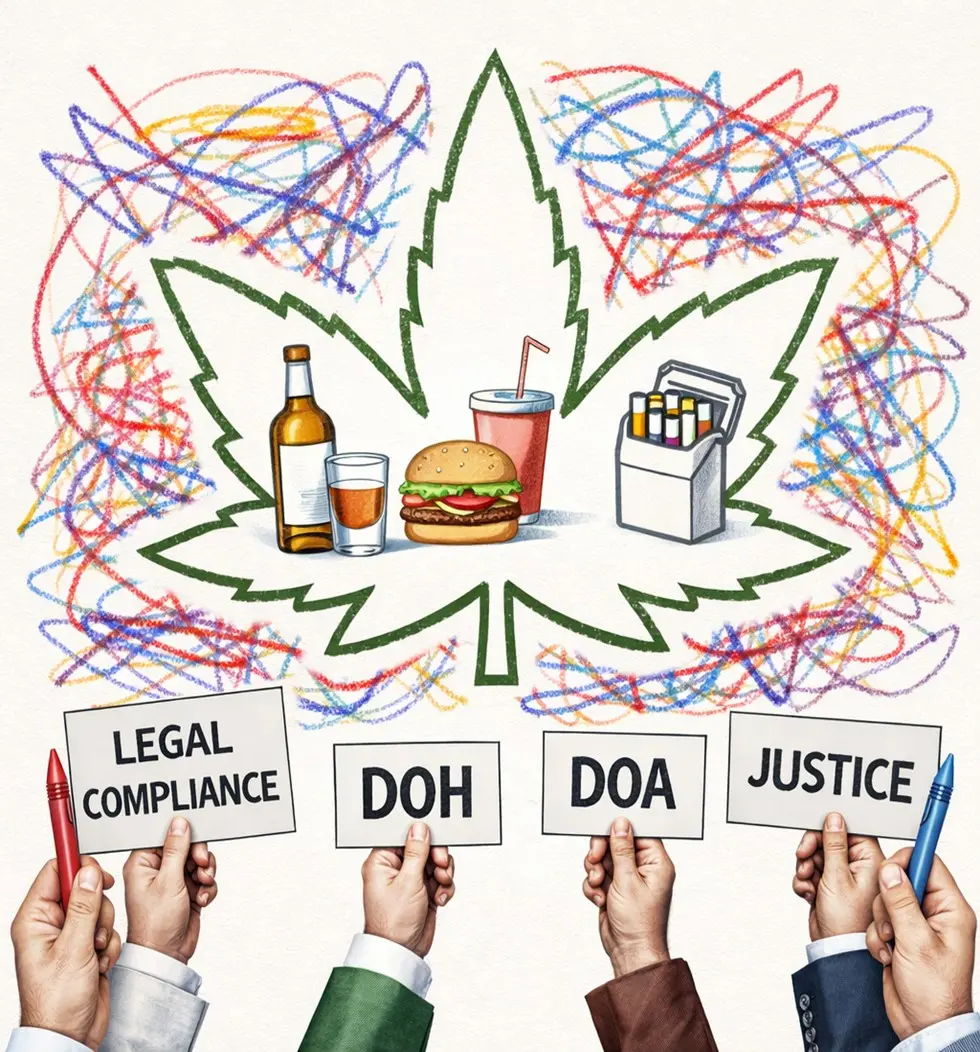
South Africa already has working systems for alcohol and tobacco, licensing, retail rules, labelling, taxation and age controls. Cannabis fits these models. There is no need to invent a complicated new regime. Treat it like the other controlled substances we already regulate successfully.
Public health worries are not a reason to delay. They are the strongest reason to act. Only a regulated market can deliver proper standards, testing, packaging and age enforcement. The informal market gives none of that.
The frameworks exist. The evidence gap can be closed quickly. The protective tools are written.
What is missing is the decision to move from planning to actual implementation.
Charl Botha is a legal strategist with a B.Proc degree, cannabis policy specialist, and spokesperson for Team H3. This is Part 4 of our ongoing series drawn from the latest parliamentary proceedings on the National Cannabis Master Plan.
 By Charl Botha



Share this page with your family and friends.